
CamdenCAN Emergency Preparedness Initiative
How local households and neighborhoods can adapt now to rising energy costs,
fertilizer shortages, freight disruptions, and global instability.
Global conflict, fuel disruption, and fertilizer shortages can feel far away—until they show up as higher heating bills, diesel costs, food prices, delayed deliveries, and pressure on local farms, fisheries, families, and towns. This CamdenCAN guide offers practical steps Midcoast Maine households can take now to become safer, more locally resilient, and better connected.
Why CamdenCAN is sharing this now
Midcoast Maine depends on long supply chains for fuel, food, fertilizer, medicine, replacement parts, and many everyday goods. When global energy systems are disrupted—especially around major chokepoints such as the Strait of Hormuz—the effects can travel quickly through diesel prices, freight costs, heating oil, food prices, farm inputs, and household budgets.
This is not a call to panic. It is a call to prepare wisely, locally, and together.
The most useful preparedness is not fear-based stockpiling. It is the steady work of making our homes warmer, our food systems more local, our neighborhoods more connected, our transportation less fuel-dependent, and our community members better able to care for one another.
Dmitry Orlov’s writings –informed by his eyewitness experiences with Soviet collapse– offer one helpful framing: families and communities still have choices, especially if they begin reducing dependence on fragile high-energy systems before they are forced to do so. His approach emphasizes local work, repair, reuse, food growing, secure heat, social trust, barter, useful skills, and community interdependence.
John Michael Greer’s advice to “collapse now and avoid the rush” offers a similar practical message: reduce dependence on fragile systems before a crisis forces the issue, by working closer to home, buying less, repairing and reusing, maintaining health, avoiding unnecessary debt, and strengthening barter, time-bank, and mutual aid networks. The point is not that collapse is certain; it is that resilience is practical, social, and useful even when disruptions remain uneven or temporary.
1. What global fuel disruption could mean for Maine. Maine is especially exposed to fuel shocks because petroleum is central to both transportation and home heating. Maine’s state energy profile notes that most petroleum consumed in Maine is used for transportation and residential heating, and that Maine consumes more residential heating oil per capita than any other U.S. state.
When diesel prices rise, the effects are not limited to gas stations. Diesel moves food, building supplies, heating fuel, farm products, mail, medical supplies, and nearly everything on store shelves. Because much of Maine’s freight moves by truck, diesel costs are likely to pass through to consumers.
For Midcoast Maine, the practical concern is not only whether goods are available. It is whether households, farms, fishermen, schools, towns, and small businesses can afford the fuel, freight, heat, repairs, and inputs they need.
Likely local effects include:
- Higher heating oil and propane costs
- Higher gasoline and diesel prices
- More expensive groceries
- Higher farm production costs
- Increased cost of building materials and repairs
- Pressure on fishing, trucking, logging, landscaping, construction, and trades
- Strain on low-income households, elders, renters, and people with medical needs
- Delays in deliveries, replacement parts, and specialized supplies
- Increased demand at food pantries and mutual aid networks
A deeper dive into causes
Freight inflation showing up quickly because so much of Maine’s freight, food, building supplies, and household goods move by truck. Food-price increases arriving in two waves: first through diesel-dependent trucking, fishing, farm equipment, refrigeration, and delivery; then through fertilizer and feed costs. Heating vulnerability becoming important before winter, especially for households that rely on heating oil, propane, or poorly insulated housing. Economic stress on tourism, fishing, logging, construction, trades, ferries, school transportation, municipal plowing, road work, and emergency services. Local food systems becoming even more valuable, while still needing support because farms, fisheries, and processors also depend on fuel, packaging, refrigeration, repairs, and inputs
CamdenCAN’s practical message: prepare in ways that make life better even if the worst-case scenario does not happen.
2. Core preparedness principle: reduce dependence before crisis peaks
The strongest preparedness is not panic buying. It is gradually reducing dependence on fragile systems and building local alternatives before everyone is under pressure at once.
Prepare by becoming less dependent on:
- Long-distance fuel supply chains
- Daily car travel
- Imported fertilizer
- Just-in-time grocery systems
- Disposable goods
- Single-source heating systems
- Isolated households
- Debt-heavy lifestyles
- Emergency services as the only safety net
Prepare by becoming more dependent on:
- Neighbors
- Local farms and fisheries
- Home weatherization
- Shared tools, like Maine Tool Library, or Gear Share
- Repair skills, or a Repair Cafe
- Gardens and compost
- Local knowledge
- Walking, biking, carpooling, and shared transport
- Libraries, schools, churches, granges, town offices, and community hubs
This kind of preparation builds community strength while lowering household costs, emissions, and stress.
3. First step: build a basic emergency kit
Maine Emergency Management Agency recommends that every household prepare for at least three days without electricity, including nonperishable food, one gallon of water per person per day, a radio, flashlight, first aid supplies, cash, safe cooking options, blankets, medication, infant supplies, pet supplies, and other basics. MEMA’s grab-and-go guidance also points households toward 3–7 days of home supplies, sanitation items, medications for seven days, local maps, utility shutoff tools, waterproof matches, batteries, important documents, and pet or adaptive needs.
For a fuel, freight, and food-price shock, CamdenCAN recommends using MEMA’s three-day kit as the baseline, then gradually expanding toward two to eight weeks of household buffering where possible.
Basic household emergency kit:
- Three-day minimum supply of nonperishable food
- One gallon of water per person per day
- Flashlights and headlamps
- Extra batteries
- Battery or hand-crank radio, ideally NOAA weather capable
- First aid kit
- Prescription medications
- Cash in small bills
- Manual can opener
- Phone chargers and battery banks
- Blankets and warm clothing
- Hygiene and sanitation supplies
- Infant, elder, disability, and pet supplies as needed
- Copies of important documents
- Printed emergency contact list
Expanded resilience kit:
- Two to eight weeks of shelf-stable food
- Extra water storage and filtration
- Backup cooking method
- Backup heating plan
- Repair tools
- Garden tools and seeds
- Food preservation supplies
- Neighborhood contact list
- Shared plan with nearby friends or family
- Food preservation supplies, including jars, lids, dehydrator, pressure canner, water-bath canner, and freezer-backup plan
4. Food preparedness: build a practical pantry
Food preparedness should be ordinary, affordable, and familiar. Buy foods your household already knows how to cook. Rotate them. Avoid panic buying, specialty survival food, or items that will sit unused.
Good pantry staples:
- Rice
- Oats
- Flour
- Pasta
- Cornmeal
- Dry beans
- Lentils
- Split peas
- Canned beans
- Canned tomatoes
- Canned vegetables
- Canned fruit
- Canned fish
- Canned chicken
- Soups and stews
- Peanut butter
- Nuts and seeds
- Cooking oil
- Powdered milk or shelf-stable milk
- Coffee, tea, cocoa
- Salt, sugar, honey, maple syrup
- Bouillon
- Spices
- Baking powder and yeast
- Electrolyte packets
- Pet food
Storage supplies:
- Food-grade buckets
- Mason jars
- Airtight containers
- Labels and dates
- Manual can opener
- Cool, dry storage space
- Rodent-proof bins
Midcoast Maine foods to prioritize locally:
- Potatoes
- Carrots
- Beets
- Onions
- Garlic
- Winter squash
- Apples
- Cabbage
- Dry beans
- Oats and grains where available
- Local fish and seafood
- Local meat
- Eggs
- Storage crops from nearby farms
- Seaweed and kelp knowledge where legal, safe, and ecologically appropriate
Household goal: build a pantry that allows you to skip shopping for several weeks if prices spike, storms disrupt travel, or supplies become uneven.
5. Support local farms before the crisis deepens
Maine’s food system is one of our greatest resilience assets. But local farms are not immune to global shocks. Many depend on diesel, fertilizer, packaging, refrigeration, equipment, feed, plastic mulch, repairs, and transport. Supporting them now enables them to withstand the shocks and remain in business.
Ways households can help now:
- Join a CSA
- Prepay for farm shares if you can afford to
- Buy storage crops in season
- Buy local meat, eggs, grains, and beans
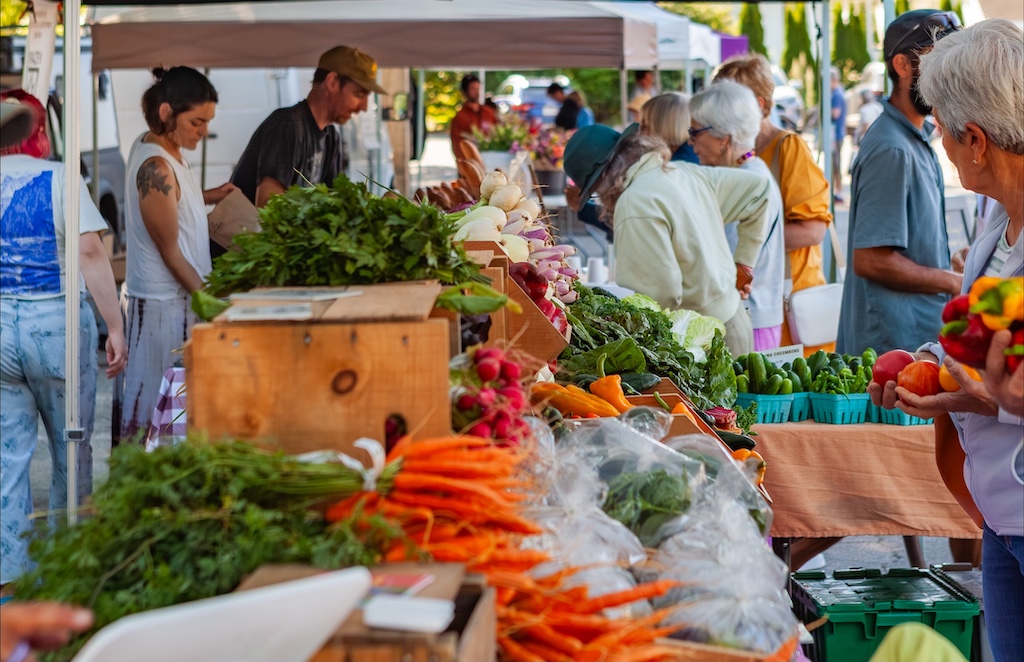
- Support farmers’ markets
- Ask farms what bulk items they can offer
- Buy seconds for preserving
- Volunteer with gleaning programs
- Support food pantries that purchase from local farms
- Advocate for town support of farmland protection, community gardens, and local food infrastructure
Community-level ideas:
- Camden-area bulk buying club
- Winter storage crop program
- Local grain and bean purchasing group
- Community root cellar exploration
- Farm-to-food-pantry fund
- Shared commercial kitchen access
- Neighborhood garden mentor network
6. Garden and soil preparedness: reduce dependence on imported fertilizer
Fertilizer disruption matters because modern food production depends heavily on nitrogen fertilizers, many of which are tied to natural gas and global trade. Households and communities can respond by building soil fertility locally. Vermont’s Rich Earth Institute has extensive research and guides on using free human urine as a fertilizer (for home gardens too), removing waste from water systems and building fertility for free.
Start or improve a compost system:
- Compost kitchen scraps & yard waste
- Leaves
- Grass clippings from unsprayed lawns
- Garden waste
- Coffee grounds
- Wood chips
- Straw
- Seaweed where legally and ecologically appropriate
- Aged manure from trusted local sources
- Pee-cycling–science-based use of urine as “liquid gold” fertilizer
Buy or save:
- Compost thermometer
- Garden fork
- Broadfork
- Shovel
- Rake
- Wheelbarrow
- Buckets
- Seed trays
- Row cover
- Frost cloth
- Insect netting
- Garden gloves
Grow storage crops:
Consider building a cool/dry environment for long-term storage, or planning to distribute your crop widely in the community.
- Potatoes
- Beans
- Peas
- Garlic
- Onions
- Carrots
- Beets
- Cabbage
- Kale
- Winter squash
- Turnips
- Rutabagas
Grow fertility:
Th following “green manures” can be grown as cover crops and cut or turned into the soil to build organic matter and nutrients.
- Clover
- Field peas
- Oats
- Winter rye
- Buckwheat
- Comfrey
- Mulched pathways
- Leaf mold
- Perennial herbs
Get a soil test: before adding lime, minerals, or amendments, use a soil test through UMaine Cooperative Extension or another reliable service, like Knox-Lincoln Soil & Water Conservation District .
Community goal: make Midcoast-area gardens less dependent on purchased fertilizer and more dependent on compost, cover crops, mulch, perennial systems, and local nutrient cycling.
7. Water preparedness
For a short outage, stored water may be enough. For a longer disruption, households should think about drinking water, cooking water, hygiene, flushing, pets, gardens, and wells.
Household water list:
- Stored drinking water
- Food-grade water containers
- Ceramic filter, gravity filter, or high-quality camping/backcountry filter
- Camping or backcountry filter
- Water purification tablets
- Unscented bleach for emergency treatment
- Buckets for utility water
- Rain barrels for gardens
- Grey water for gardens from washing and/or dishes if biodegradable soaps are used.
- Printed instructions for treating water
- Backup plan for wells, including battery/generator backup, a hand-pump option where feasible, or a neighbor/community water agreement
For homes with wells:
- Know whether your pump works during outages
- Consider battery or generator backup
- Talk with neighbors about shared water access
- Store water before major storms
- Keep handwashing water separate from drinking water
Community questions:
- Where are public water sources?
- Which buildings can serve as water distribution points?
- Which neighbors have wells, springs, ponds, or backup pump capacity?
- Who may need water delivered?
8. Cooking during outages or fuel shortages
Many households can store food but cannot cook it if the power goes out. Plan for safe, simple cooking.
Backup cooking options:
- Propane camp stove
- Butane stove
- Outdoor grill
- Rocket stove
- Solar oven for summer use
- Wood cookstove where safely installed
- Thermos cooking
- Haybox or retained-heat cooking
- Cast iron pan
- Large soup pot or stock pot
- Kettle
Safety essentials:
- Never use grills, camp stoves, or generators indoors
- Use proper ventilation
- Keep carbon monoxide detectors working
- Keep fire extinguishers accessible
- Store fuel safely and legally
- Keep matches and lighters dry
- Cook outdoors when required
Low-energy foods to keep on hand:
- Canned soups
- Canned beans
- Nut butters
- Crackers
- Oats
- Couscous
- Instant rice
- Dehydrated soups
- Dried fruit
- Shelf-stable milk
- Tea and bouillon
9. Heating and winter resilience
Heating is one of Maine’s biggest vulnerabilities. Getting help to weatherize your home is a great way to meet neighbors and save money while increasing security. Get affordable window inserts to reduce drafts and save fuel through the volunteer group WindowDressers, ordering inserts by late August and participating in the Camden build in October. Preparedness for fuel disruption should begin before winter.
Do now:
- Sign up for a free energy coach visit to help assess ways to save energy
- Weatherstrip doors
- Caulk gaps
- Add door sweeps
- Use window plastic or interior storm inserts where needed
- Add heavy curtains
- Insulate attic hatches
- Clean heat pump filters
- Service heating systems
- Schedule chimney inspection
- Secure firewood early if you have a safe woodstove
- Create one “warm room” plan
- Check on elders and renters in drafty homes
Warm-room plan:
Choose one room that can be kept warm with the least energy. Add:
- Rugs
- Heavy curtains
- Blankets
- Sleeping bags
- Wool clothing
- Thermal underwear
- Door draft blockers
- Battery lighting
- Charging station
- Thermometer
- Carbon monoxide detector
Backup heat questions:
Consider what your backup plan will be if your house gets too cold (or hot in a heat wave). Make plans in advance to shelter with friends or family who have backup heating/cooling and power, particularly if you have medical equipment requiring electricity. Some question to consider:
- Where are the nearest warming/cooling centers?
- Can your town, church, library, school, or grange serve as a resilience hub?
- What happens if heating oil prices rise?
- What options do you have during an electric power outage?
- Is any generator or battery system safely installed, ventilated, and appropriate for its use?
- Who in the neighborhood has safe wood heat?
- Who has medical equipment requiring power?
See also Extreme Temperature Response and Resilience: A Guidebook for Maine Communities, a planning aid for municipalities and community-based organizations preparing for extreme heat and extreme cold events.
10. Transportation: reduce fuel dependence
For Midcoast Maine, transportation preparedness means planning for fewer, more expensive, and more purposeful trips.
Household actions:
- Keep vehicles at least half full
- Combine errands
- Share rides
- Maintain tires; inflated tires save fuel.
- Keep oil, coolant, wipers, tires, belts, fuses, and basic fluids in good condition
- Keep bikes functional; use bike helmets.
- Add baskets, panniers, or a bike trailer
- Consider an e-bike, cart, baskets, panniers, or a bike trailer where useful and affordable
- Keep a tire pump, tubes, and patch kit
- Map walking routes to food, pharmacy, library, town office, and neighbors
- Arrange medical ride backups
Community actions:
- Neighborhood ride boards
- Volunteer driver networks
- Carpool groups
- Senior ride coordination
- Bike repair clinics
- Shared cargo bikes or trailers
- Local delivery coordination from farms and stores
- Town-level fuel priority planning for EMS, plowing, schools, ferries, food, and vulnerable residents
Preparedness goal: share, carpool, and reduce the number of essential trips that require a private vehicle. The goal is not hoarding gasoline; it is needing less gasoline. Store any stabilized fuel only if it can be done safely and legally.
11. Health and medicine
Medical preparedness is especially important during supply disruptions, storms, fuel shortages, or household income stress.
Household health supplies:
- 30–90 day supply of essential prescriptions where possible
- Copies of prescriptions
- First aid kit
- First aid manual
- Thermometer
- Pain reliever
- Antihistamine
- Anti-diarrheal medicine
- Oral rehydration salts
- N95 masks
- Disposable gloves
- Wound care supplies
- Extra eyeglasses or contacts
- Dental basics, including floss, extra toothbrushes, and temporary filling material where appropriate
- Menstrual supplies
- Incontinence supplies
- Infant supplies
- Mobility and adaptive equipment supplies
- Backup power for medical devices
Local preparedness:
- Know who nearby has nursing, EMT, caregiving, herbal, or first aid skills
- Create a confidential check-in system for medically vulnerable neighbors
- Know where urgent care, pharmacy, and emergency services are located
- Keep printed medical information in an accessible place
- Plan for medication pickup if you cannot drive
12. Repair, reuse, and household resilience
Fuel and freight disruption often appears as delayed parts, expensive replacements, or unaffordable repairs. Keeping useful tools and repair supplies on hand helps households avoid unnecessary replacement costs.
Useful household repair supplies:
- Sewing kit
- Needles and heavy thread
- Buttons, patches, zippers
- Fabric scraps
- Duct tape
- Electrical tape
- Zip ties
- Wire
- Rope and paracord
- Screws, nails, bolts
- Hammer
- Screwdrivers
- Pliers
- Wrench set
- Handsaw
- Utility knife
- Sharpening stone
- Tarps
- Work gloves
- Bicycle tools
- Spare tubes and patch kits
- Filters, belts, fuses, and batteries for essential equipment
Community ideas:
Explore the holdings of your neighborhood/neighborhood pod. You may be able to share resources. For example, Who has solar panels and an electric vehicle (with the capacity to recharge their vehicle)? Who has battery back-up for solar (with the capacity to charge cell phones)? Who has marine or other two-way radios?
- Repair cafés
- Tool libraries
- Mending circles
- Bike repair days
- Appliance repair skill-shares
- Swap events
- “Fix-it” directory of local tradespeople
13. Money, documents, and household budgeting
Fuel and food shocks quickly become household budget shocks. Preparedness includes reducing financial fragility.
Household steps:
- Keep cash for at least one to two weeks of basic expenses if possible, in small bills
- Reduce unnecessary subscriptions
- Pay attention to debt and variable-rate payments
- Avoid taking on new avoidable debt
- Build a pantry gradually while prices are manageable
- Buy winter needs before winter demand spikes
- Keep paper copies of important documents
- Keep insurance, IDs, medication lists, and contacts together
- Know how to shut off utilities
- Keep printed maps
- Keep a written household emergency plan
Important documents:
- IDs
- Insurance papers
- Medication list
- Emergency contacts
- Pet records
- Deeds, leases, or mortgage information
- Utility account information
- Medical directives
- Copies of prescriptions
- Local resource list
14. Communications during disruption
When power, internet, or cell networks are unreliable, simple communication tools matter.
Household supplies:
- Battery radio
- Hand-crank or solar radio
- NOAA weather radio
- Flashlights
- Headlamps
- Battery banks
- Car charger
- Solar charger
- Printed phone numbers
- Local maps
- Whistle
- Notebook and pens
Neighborhood systems:
- Phone tree
- Text group
- Printed contact list
- Check-in buddy system
- Bulletin board at library, church, grange, school, or town office
- Ham radio contacts where available
15. Community preparedness: the most important category
No household can prepare for everything alone. The strongest preparedness is a living network of people who know, trust, and help one another.
Start with your street or neighborhood:
- Who lives alone?
- Who is elderly?
- Who has medical needs?
- Who has small children?
- Who has a generator?
- Who has a well?
- Who has a woodstove?
- Who has tools?
- Who has a truck?
- Who gardens?
- Who can cook for a group?
- Who has first aid skills?
- Who may need help but hesitate to ask?
Community resilience projects many local organizations are supporting:
- Neighborhood preparedness pods
- Local energy coaching
- Street-by-street contact maps
- Bulk food buying groups
- Local farm support circles
- Seed swaps
- Tool libraries
- Repair cafés
- Bike repair clinics
- Community composting
- Food preservation workshops
- Weatherization work parties
- Heat pump and efficiency education
- Warming and cooling center coordination
- Community kitchen identification
- Emergency ride networks
- Time bank, barter network, or skill exchange
- Local resilience directory
Preparedness principle: individual stockpiles run down; community relationships grow stronger with use.
16. What to do this week, this month, this summer, and before winter
This week
- Fill prescriptions
- Buy or check flashlights, batteries, radio, and first aid supplies
- Store at least three days of water
- Add basic pantry staples
- Check on neighbors
- Print emergency contacts
- Keep vehicle fuel above half full
- Identify your household’s backup cooking method
- Join or renew connection with a local farm, market, or food pantry
This month
- Build toward two to four weeks of food
- Weatherstrip doors and windows
- Start composting
- Plant or plan storage crops
- Buy seeds
- Repair bikes
- Create a neighborhood contact list
- Identify who may need help in outages
- Make a backup heat plan
- Gather repair and mending supplies
- Review subscriptions, debt, and recurring expenses for avoidable financial strain
This summer
- Assess how best to save energy in your home, with help from Camden/Rockport Energy Coaching
- Preserve food
- Buy local storage crops in bulk
- Build soil fertility
- Add rain barrels for gardens
- Organize a street-level preparedness meeting
- Support local farms before fall
- Learn canning, dehydrating, fermenting, or root-cellaring
- Reduce routine driving
- Coordinate shared tools and skills
Before winter
- Service heating systems
- Clean chimneys
- Secure safe firewood if applicable
- Check heat pumps
- Install window plastic where needed
- Prepare a warm-room plan
- Confirm elder check-ins
- Review town warming center options
- Stock winter pantry foods
- Prepare for higher heating costs
CamdenCAN’s message: prepare for resilience, not fear
Emergency preparedness is not just about surviving a crisis. It is about building the kind of Midcoast community we already want:
- Warmer homes
- Lower fuel dependence
- Stronger local farms
- Less waste
- More repair and reuse
- Safer neighborhoods
- Better care for elders and children
- Practical skills
- Shared tools
- Local food
- Trusted relationships
- A community that can adapt together
The best time to prepare is before everyone is under pressure. The best kind of preparedness makes daily life healthier, more affordable, more connected, and more resilient—whether the disruption is a global oil shock, a winter storm, a household emergency, or a changing climate.